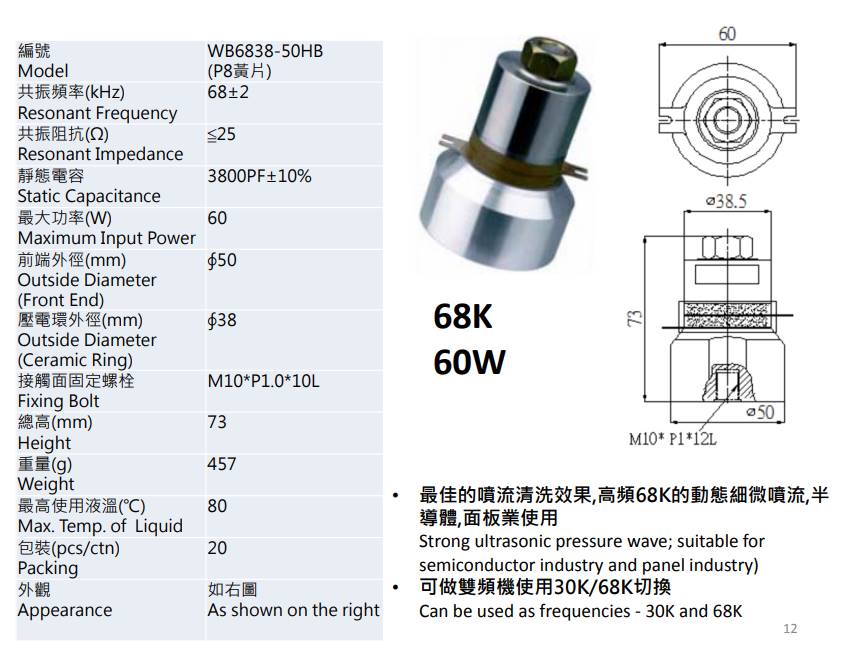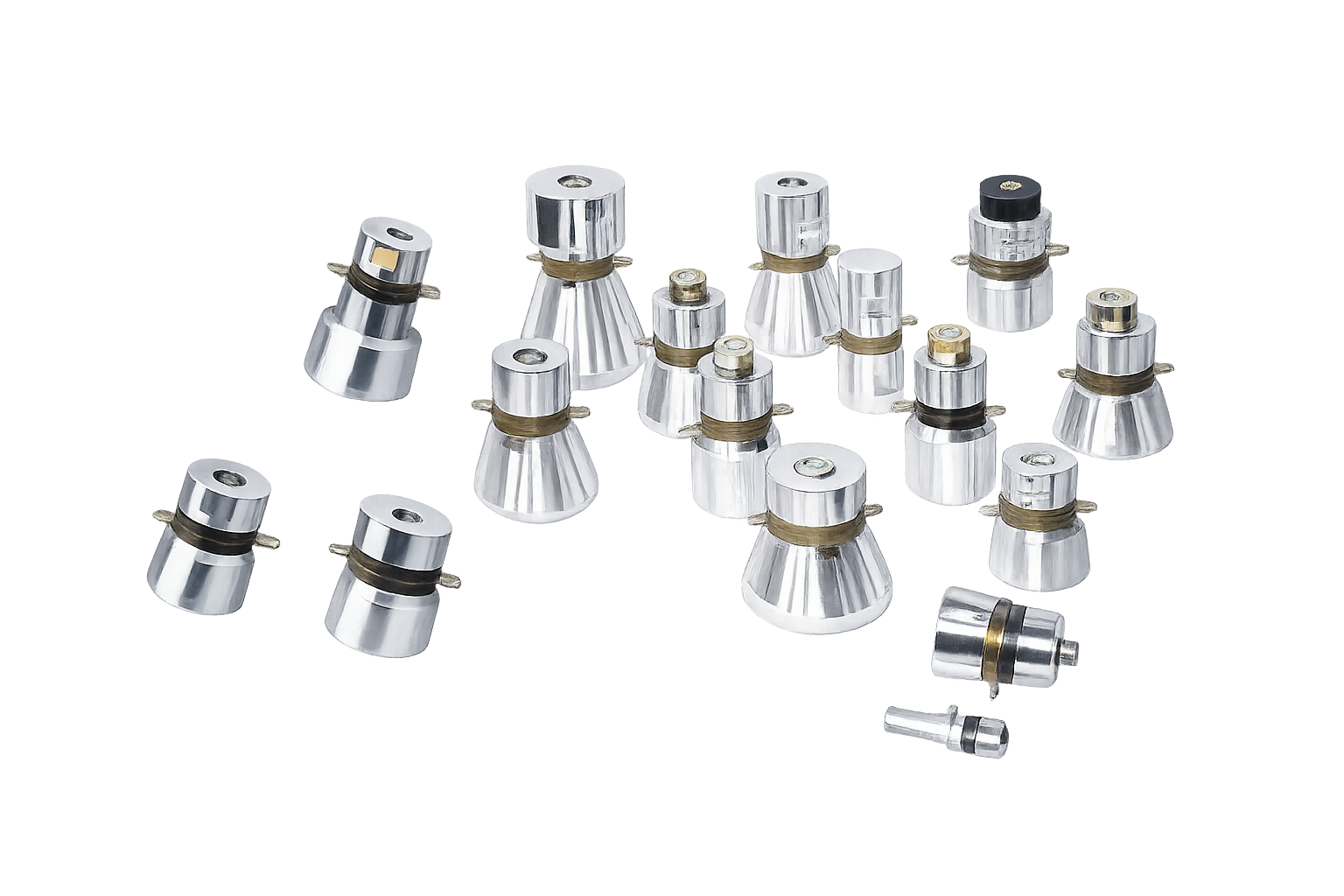
oscillator 超音波振盪器特點:
Frequency Categorization: Sorted and screened by frequency for easy matching with ultrasonic generators (drivers).
Uniform Capacitance: Consistent capacitance ensures stable and even power output.
Thermal Stability: Optimized design minimizes heat buildup during operation.
High-Precision Ultrasonic Cleaning Technology (20kHz–160kHz)
Powerful cavitation with up to 160,000 vibrations per second to eliminate microscopic contaminants.
Micro-Particle Removal: Effectively cleans dirt and particles ranging from 10µm down to 0.1µm.
Industrial Degreasing: Removes stubborn oil and grease residues generated during machining and cutting processes.
Marine Maintenance: Capable of removing barnacles and shell growth from ship hulls.
Semiconductor Grade: Ideal for high-precision wafer cleaning.
Delicate Material Care: Suitable for quartz and optical lens cleaning without surface damage.
Product Specifications
Dimensions: Please refer to the Data Download section
Frequency: 20–165 kHz
Power Output: 50–65 W
Installation Requirements
Plate Thickness: For stainless steel plates between 0.5–2mm.
Mounting Method: Stud welding is required (must use weld studs).
頻率選擇 | |||
|---|---|---|---|
肉眼可看見的油汙 | 20KHz~28KHz | ||
汙染物粒徑10um↑ | 選擇40KHz | ||
汙染物粒徑10um↓ | 選擇100KHz↑ | ||
133KHz影片
40KHz/133KHz影片介紹
各種頻率介紹
25K 1400W衝擊鋁箔
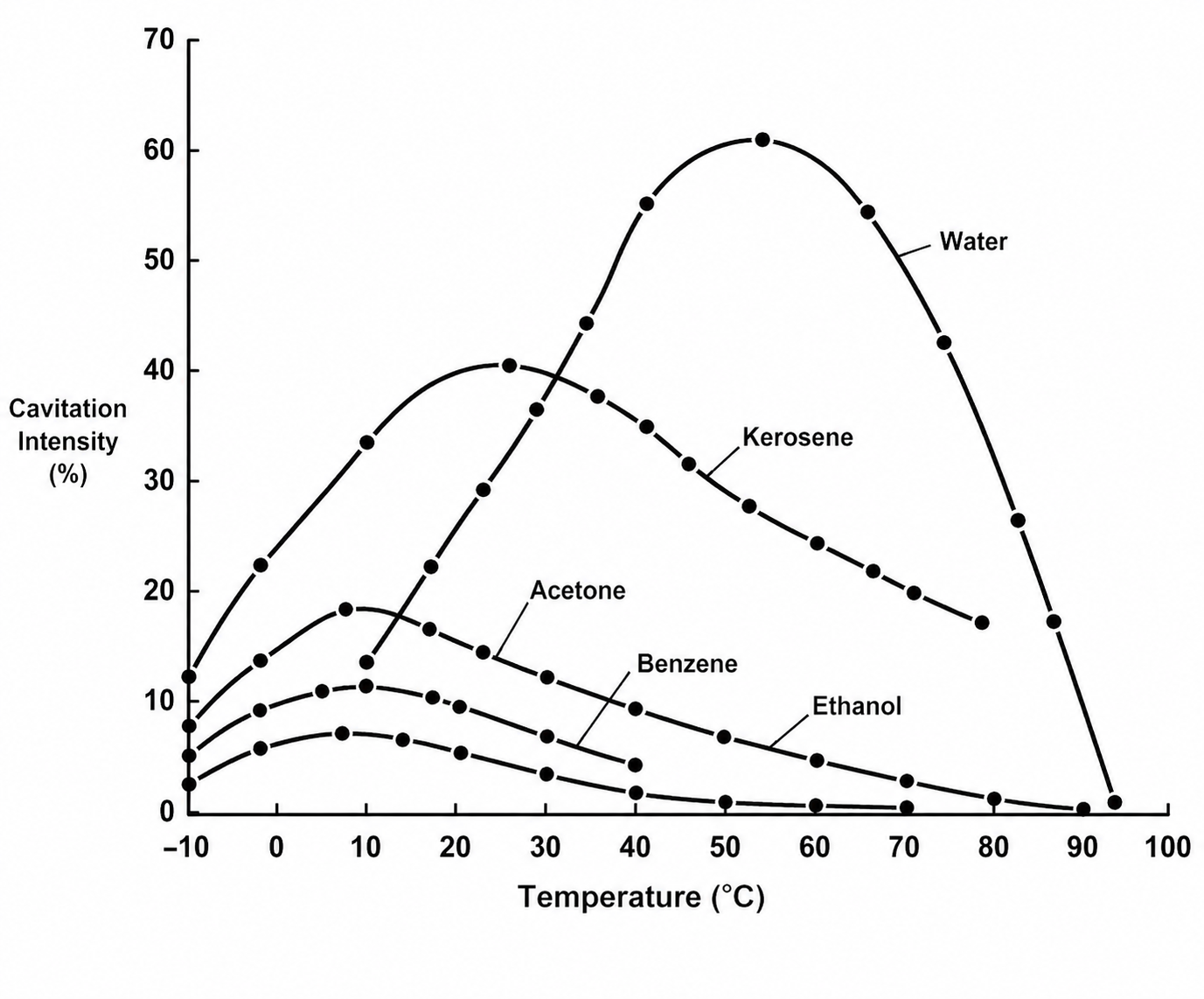
Q1: Do different cleaning liquids require different temperatures?
A1: Yes. The cleaning effectiveness varies significantly based on the liquid used and its temperature. Please refer to the chart below for the relationship between cleaning intensity and liquid types.
Q2: Does a higher frequency always mean a cleaner result?
A2: Not necessarily. The choice of frequency depends on the precision of the object and the type of contamination:
Higher Frequencies (Smaller Cavitation Bubbles):
Smaller bubbles are better for high-precision and high-value products, such as wafers, glass, and sensitive electronics.Lower Frequencies (Larger Cavitation Bubbles):
Larger, more powerful bubbles are ideal for heavy-duty cleaning of contaminated items, such as plastic parts, stainless steel products, and metal components.
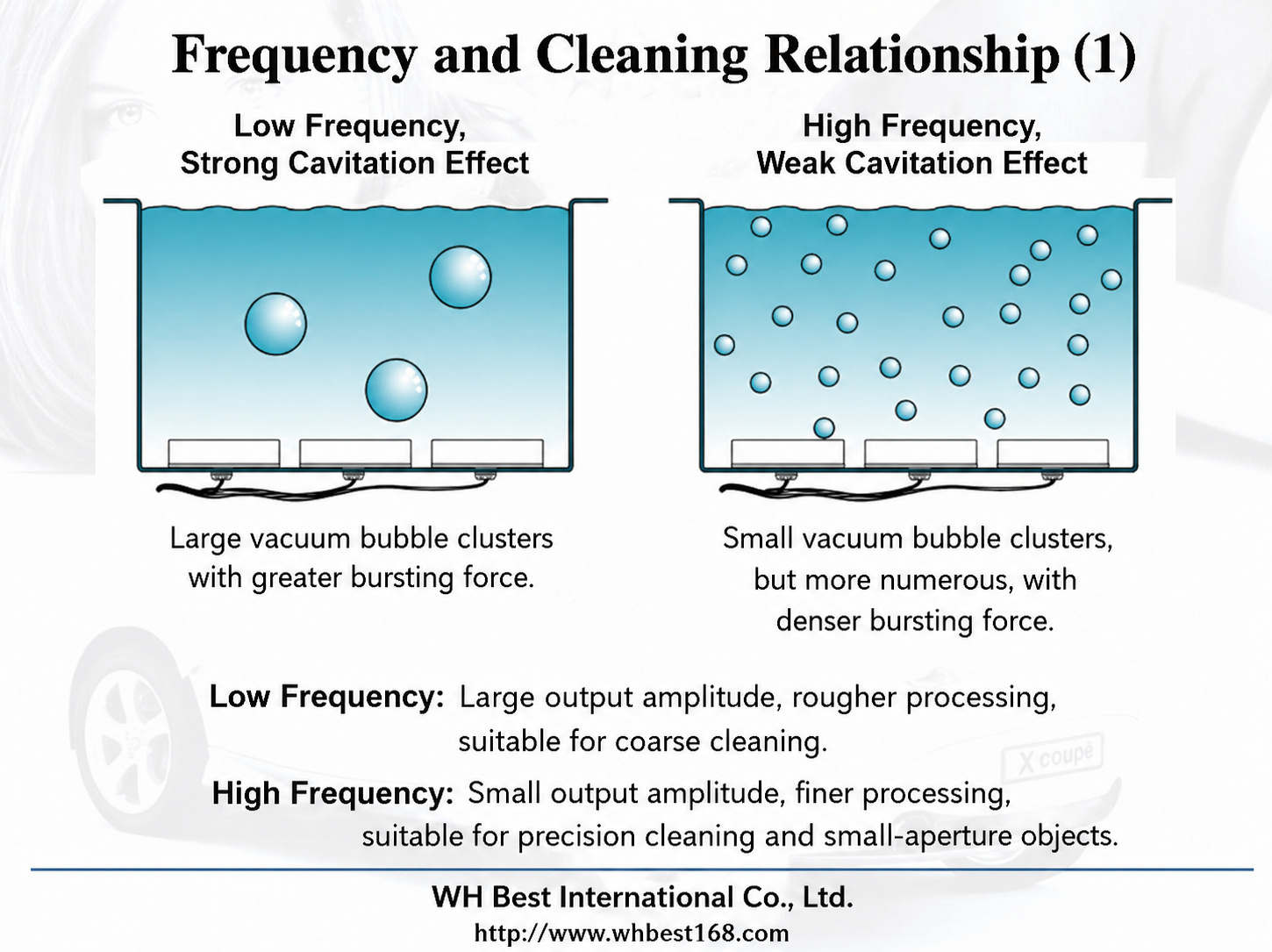
Q3: Does a lower frequency provide stronger cleaning power?
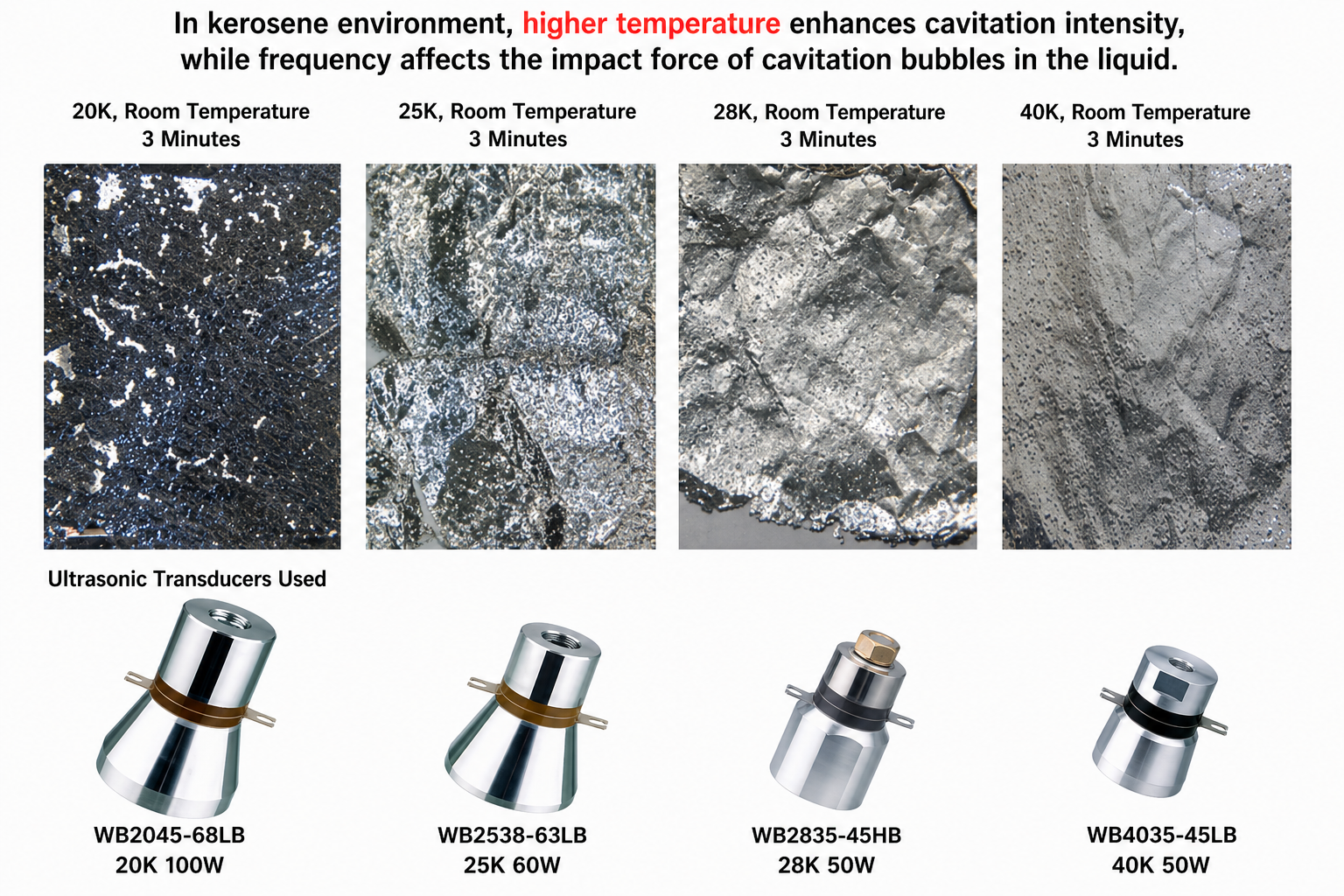
A2: Yes, generally speaking. Lower frequencies generate larger cavitation bubbles that release more energy upon implosion. To demonstrate this, we placed aluminum foil into ultrasonic cleaners with different frequencies; the results are shown in the image below.